

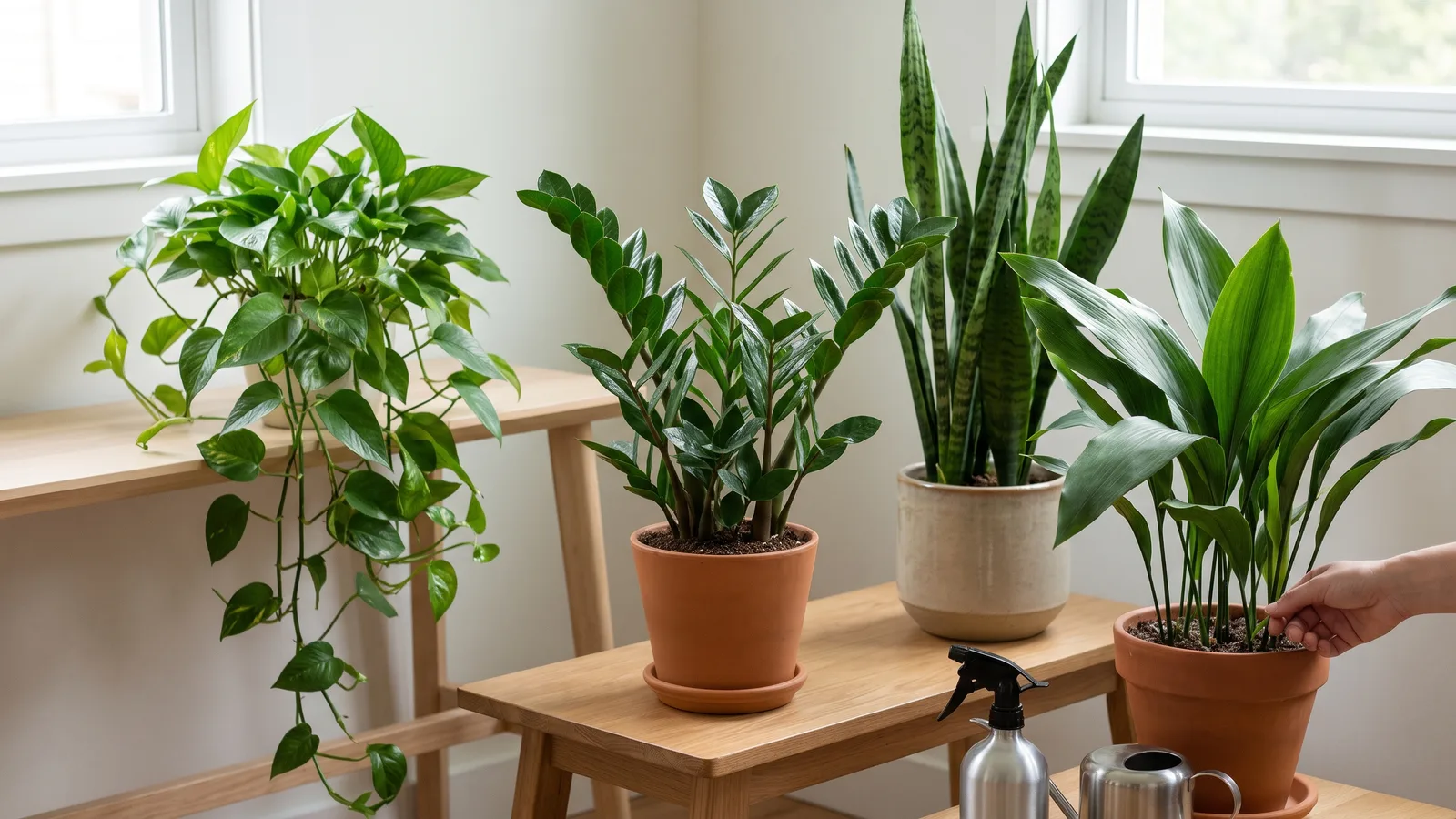
Dim rooms rule out many houseplants, but four keep going in them. Here is what the ZZ plant, pothos, snake plant and cast iron plant tolerate, and where each one still struggles.
Most houseplants sold in stores grow under bright lights, so a dim apartment can feel like a special problem. It is not rare. Plenty of homes have one window, a north wall, or a sofa between the plant and the glass, and those are the spots most people actually have to work with.
Low light is not the same as no light. A plant in a dark corner gets almost nothing from the room. A plant a few steps from a north-facing window gets far less than it would near a south window, but usually more than it would get in that corner. The difference matters, because the four plants below handle dim spots in very different ways.
How to tell if a spot is too dim
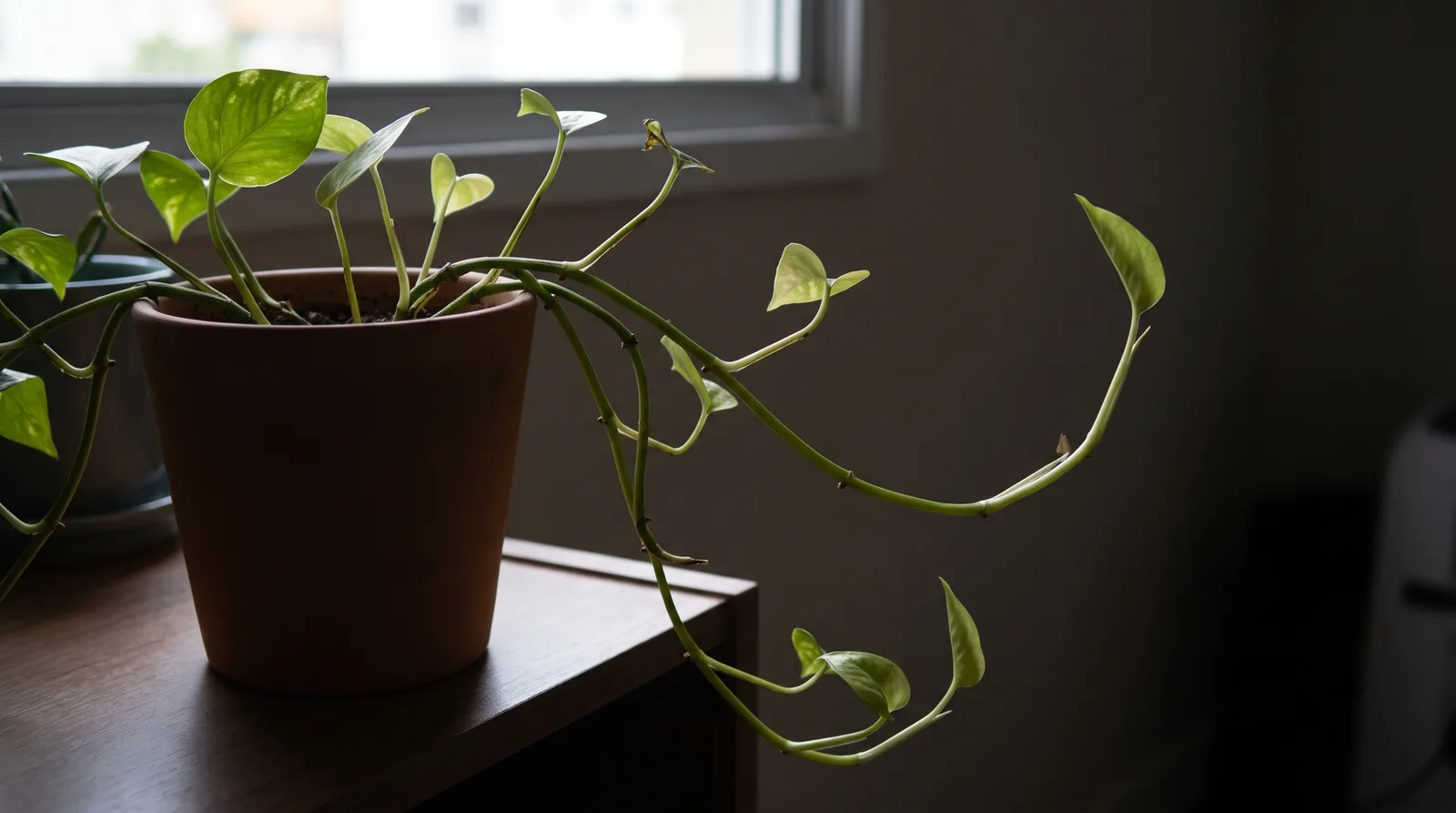
Dim light changes plants slowly, so the signs are easy to miss. Pothos shows it clearly. Too little light can make it grow long, thin stems with few leaves, a pattern gardeners call leggy. The plant does not die at once. It stretches toward whatever light it can find.
Variegated plants show it differently. White or yellow patches fade, and new leaves come in plain green. That is not a disease, and it is not a reason to panic. It is the plant telling you the spot is too dark for that pattern.
1. ZZ plant: the most tolerant of the four
Start here if your room is dim. University of Florida research, published through UF/IFAS Extension, found that a ZZ plant can grow and produce new leaves under about 25 foot-candles of interior light for more than a year. The same research found it can go three to four months without being watered. Those are results from a study, not promises about your living room, but they show how much margin the plant has.
Two limits matter. A ZZ plant under low light will not bloom, so do not buy it for flowers. And the Santa Rosa County Cooperative Extension says that, although the plant grows in very low light, even under fluorescent bulbs, it does best in bright indirect sunlight. Low light keeps the ZZ alive. A brighter window is what helps it grow.
2. Pothos: forgiving, but it wants more light
Pothos is the plant most people already own, and it copes with dim rooms better than its reputation suggests. Clemson's extension guidance says pothos prefers bright, indirect light but tolerates lower light. Tolerance has a cost. Growth slows, and the plant produces fewer leaves on longer stems.
Variegation is where the trouble starts. Clemson notes that lower light can cause variegated varieties to lose some of their color. Marble Queen, a common white-patterned type, needs more light than the plain green types, and in a dim room its new growth can come out all green. Clemson lists Neon, a bright yellow-green type, as one that tolerates lower light more easily.
Sources disagree on the exact hours of light a pothos needs, so be wary of any single number. A simpler test works better. If the leaves are getting smaller and the stems are reaching, move the plant closer to the window.
3. Snake plant: tough, but watered like a desert plant
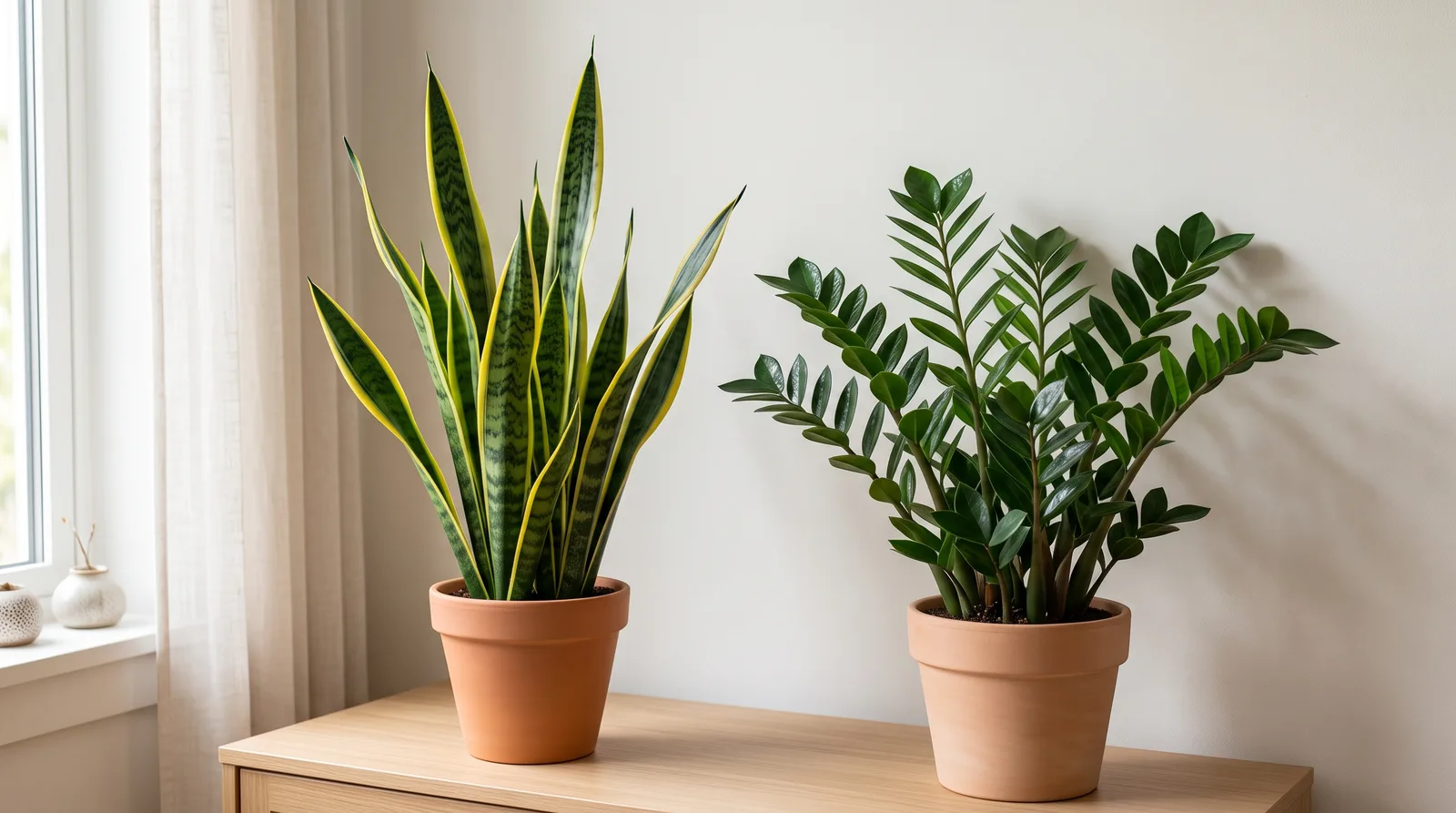
Penn State Extension says the snake plant "enjoys bright indirect light but tolerates low-light areas very well." In other words, a dim room keeps it alive, and a brighter spot helps it look its best. The UF/IFAS comparison agrees that the ZZ plant tolerates low light better than the snake plant does.
The bigger risk is water, not light. Penn State puts it bluntly: you can kill a snake plant by overwatering, but skipping water for a month will leave it no worse for wear. In a dim room the soil stays wet for longer, because the plant uses less water in low light. Watch the soil, not the calendar.
4. Cast iron plant: dark green and slow
The cast iron plant, Aspidistra elatior, is the most patient of the four. UF/IFAS describes its "dependable dark green foliage" in very low light conditions. Clemson's guidance suggests a north-facing window, or a spot away from south-facing windows, which is the same kind of room most readers have.
Two cautions. Variegated forms, such as 'Asahi', need a little more light to keep their color. And the bigger risk is again water: one care guide notes that brown patches can be a sign of overwatering.
This guide does not cover pet safety. Sources disagree on whether the cast iron plant is toxic to pets, so check a veterinary or ASPCA source before you buy for a home with animals.
Choosing a plant for your room
Start with the room, not the plant. Note which way the window faces and how far the plant will sit from it. Then compare what you have against the table below. Treat the table as a starting point, because your window and your watering habits will change the result more than any chart.
| Plant | Dim-light tolerance | Watch for |
|---|---|---|
| ZZ plant | Very good; grows under about 25 foot-candles | No blooms in low light; brighter indirect light helps growth |
| Pothos | Good, but growth slows | Leggy stems; variegated types lose color |
| Snake plant | Very good | Overwatering, which kills it faster than neglect |
| Cast iron plant | Very good; dark green leaves hold up | Brown patches can mean overwatering; variegated types need more light |
Watering in a dim room
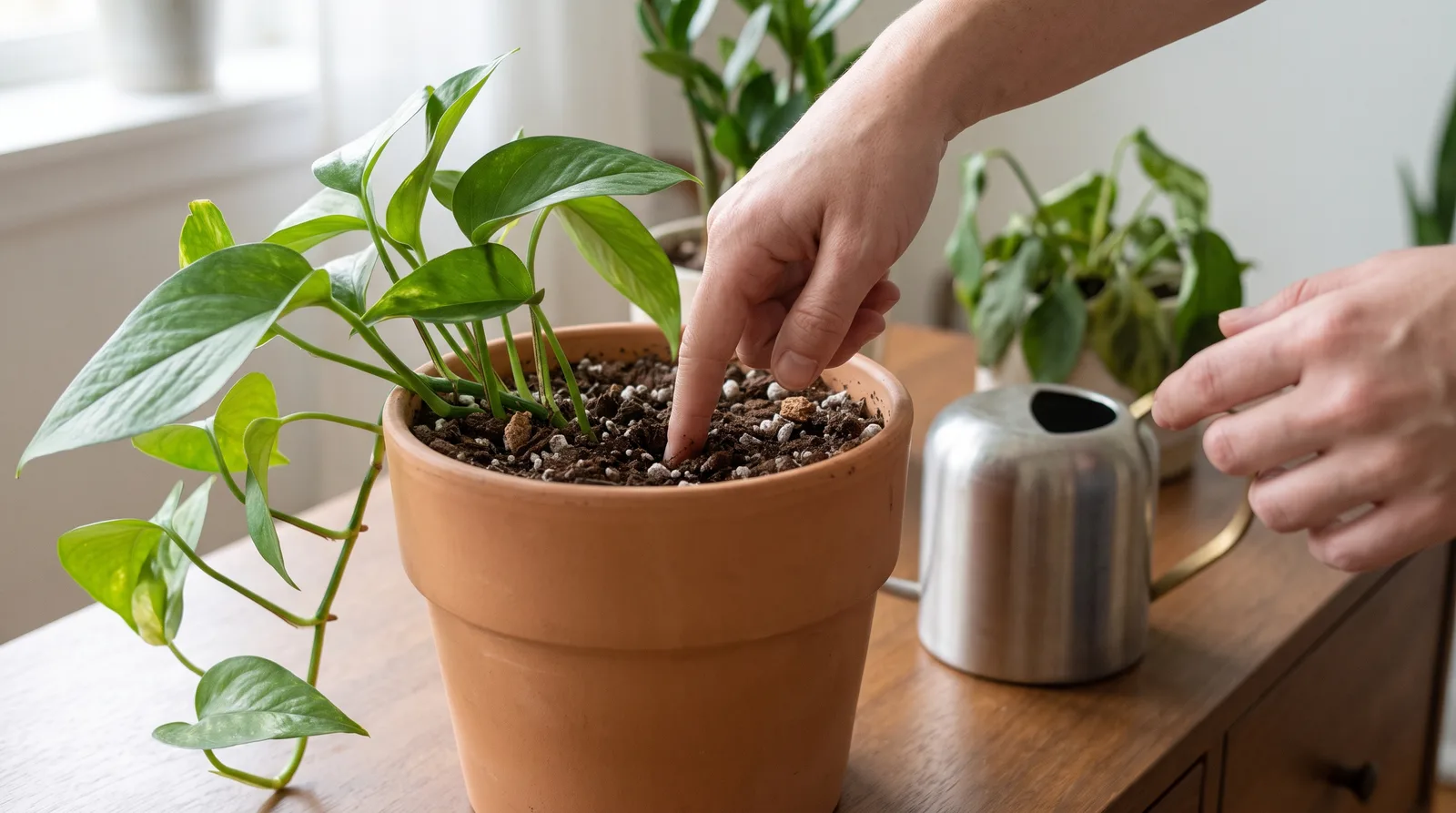
Almost every problem in this article comes back to one habit: watering on a schedule. In a dim room, water less often than you think, and check the soil first. Push a finger into the mix. If it still feels damp, wait. Wilting looks the same whether a plant has too much water or too little, so a drooping leaf is a reason to check the soil, not a reason to reach for the can.
Drainage matters as much as the amount. A pot without drainage holes keeps water at the bottom, right where the roots sit, and the roots are the part that rots first.
Can a plant live in a room with no window at all?
Most houseplants need daylight to grow, so a windowless room usually needs a grow light or another lamp. Clemson's guidance says artificial light can supplement areas that get too little light. The lamp does not have to replace a window, but it has to do the job of one.
Do low-light plants need less water?
Yes, in practice. A plant that gets less light grows more slowly and uses less water, so the soil stays wet for longer. Watering on a fixed schedule is the most common way people overwater a plant in a dim room.
Will a ZZ plant bloom in a dark room?
No. UF/IFAS says a ZZ plant will not bloom under low light conditions.
What to do this week
Pick one spot in your home that you suspect is too dark, and look at it at midday. If you need a lamp on to read there, it is dim for most plants. Put a ZZ plant there, water it only when the soil is dry, and watch it for a month. Growth, or the lack of it, will tell you more about that room than any chart.
The next question is whether the plant grows well enough to move it closer to the window. That depends on the window, and you already know more about your window than this article does.